


The Christmas period is upon us, and goods are flying off the shelves, but for some reason, the tills are not ringing as loudly as they should be.
Across the country, the five-finger discount is being used with such frequency that retailers are taking action into their own hands.
With concerns about the police response to shoplifting, many are now resorting to controversial facial recognition technology to catch culprits before they strike.
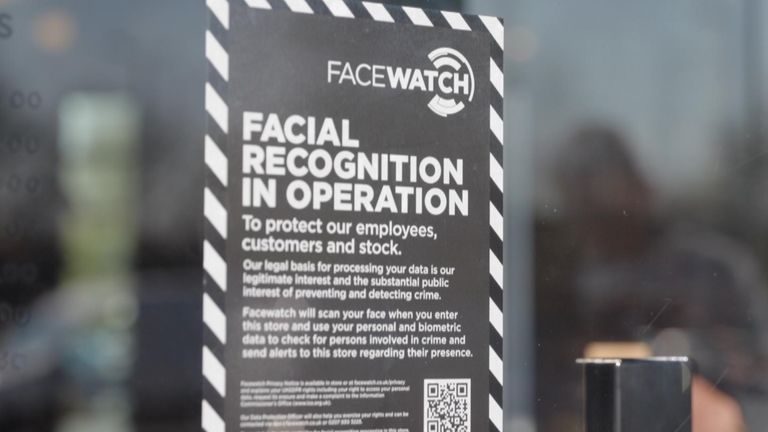
Sainsbury’s, Asda, Budgens and Sports Direct are among the high-street businesses that have signed up to Facewatch, a cloud-based facial recognition security system that scans faces as they enter a store. Those images are then compared to a database of known offenders and, if a match is found, an alert is set off to warn the business that a shoplifter has entered the premises.
It comes as official figures show shoplifting offences rose by 13% in the year to June, reaching almost 530,000 incidents. Figures reported in August showed more than 80% result in no charge.
At the same time, retailers are reporting more than 2,000 cases of violence or abuse against their staff every day. Faced with mounting losses and safety concerns, businesses say they are being forced to take security into their own hands because stretched police forces are only able to respond to a fraction of incidents.
At Ruxley Manor Garden Centre in south London, managing director James Evans said theft had become increasingly brazen and organised, with losses from shoplifting now accounting for around 1.5% of turnover. “That may sound small, but it represents a significant hit to the bottom line,” he said, pointing out that thousands of pounds’ worth of goods can be stolen in a single visit.
“We have had instances where the children get sent in to do it. They know that the parents will be waiting in the car park and they’ll know that there’s nothing that we can do to stop them.”
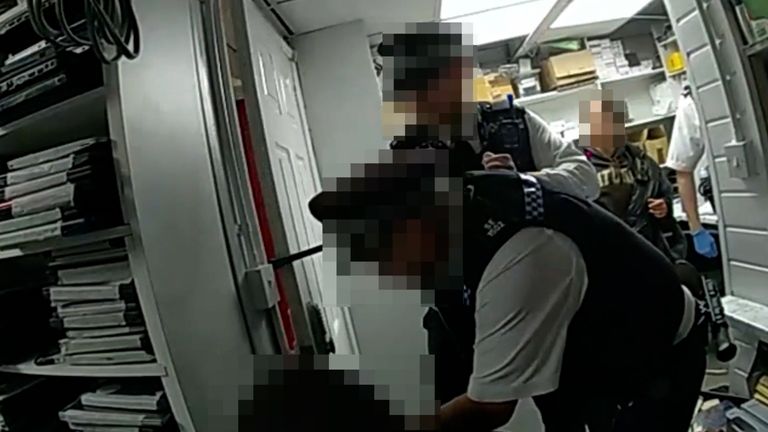
Staff members here have also had their fair share of run-ins with shoplifters. In one case, employees trying to stop a suspected shoplifter were nearly struck by an accomplice in a car. “This is no longer just about stock loss,” said James, “It is about the safety of our staff.”
However, the technology is not without its critics. Civil liberties groups have warned that the expansion of this type of technology is eroding our privacy.
Silkie Carlo, director of Big Brother Watch, called it “a very dangerous kind of privatised policing industry”.
“[It] really threatens fairness and justice for us all, because now it’s the case that just going to do your supermarket shopping, a company is quietly taking your very sensitive biometric data. That’s data that’s as sensitive as your passport, and [it’s] making a judgement about whether you’re a criminal or not.”
Silkie said the organisation was routinely receiving messages from people who said they had been mistakenly targeted. They include Rennea Nelson, who was wrongly flagged as a shoplifter at a B&M store after being mistakenly added to the facial recognition database. Nelson said she was threatened with police action and warned that her immigration status could be at risk.
“He said to me, if you don’t get out, I’m going to call the police. So at that point I turned around and I was like, are you speaking to me? Then he was like yes, yes, your face set off the alarm because you’re a thief… At that point, I was around six to seven months pregnant and I was having a high-risk pregnancy. I was already going through a lot of anxiety and, so him coming over and shouting at me, it was like really triggering me.”
The retailer later acknowledged the error and apologised, describing it as a rare case of human mistake.
Read more:
Elon Musk closer to becoming first-ever trillionaire
William and George help prepare Christmas lunch for the homeless
A spokesperson for B&M said: ‘This was a simple case of human error, and we sincerely apologise to Ms Nelson for any upset caused. Reported incidents like this are rare. Facewatch services are designed to operate strictly in compliance with UK GDPR and to help protect store colleagues from incidents of aggressive shoplifting.”
Nick Fisher, chief executive of Facewatch, said the backlash was disproportionate.
“Well, I think it’s designed to be quite alarmist, using language like ‘dystopian’, ‘orwellian’, ‘turning people into barcodes’,” he said.
“The inference of that is that we will identify people using biometric technology, hold and store their own, store their data. And that’s just, quite frankly, misleading. We only store and retain data of known repeat offenders, of which it’s been deemed to be proportionate and responsible to do so… I think in the world that we are currently operating in, as long as the technology is used and managed in a responsible, proportionate way, I can only see it being a force for good.”
Yet, there is obviously widespread unease, if not anger, at the proliferation of this technology. Businesses are obviously alert to it, but the bottom line is calling.
Source link


